Artificial intelligence has become a regular subject of discussion in boardrooms across the Netherlands. Companies are investing in new technologies, considering how to integrate them into their operations and assessing what these developments mean for their employees, customers and long-term competitiveness.
As those decisions become more consequential, so does the question of who is responsible for making them.
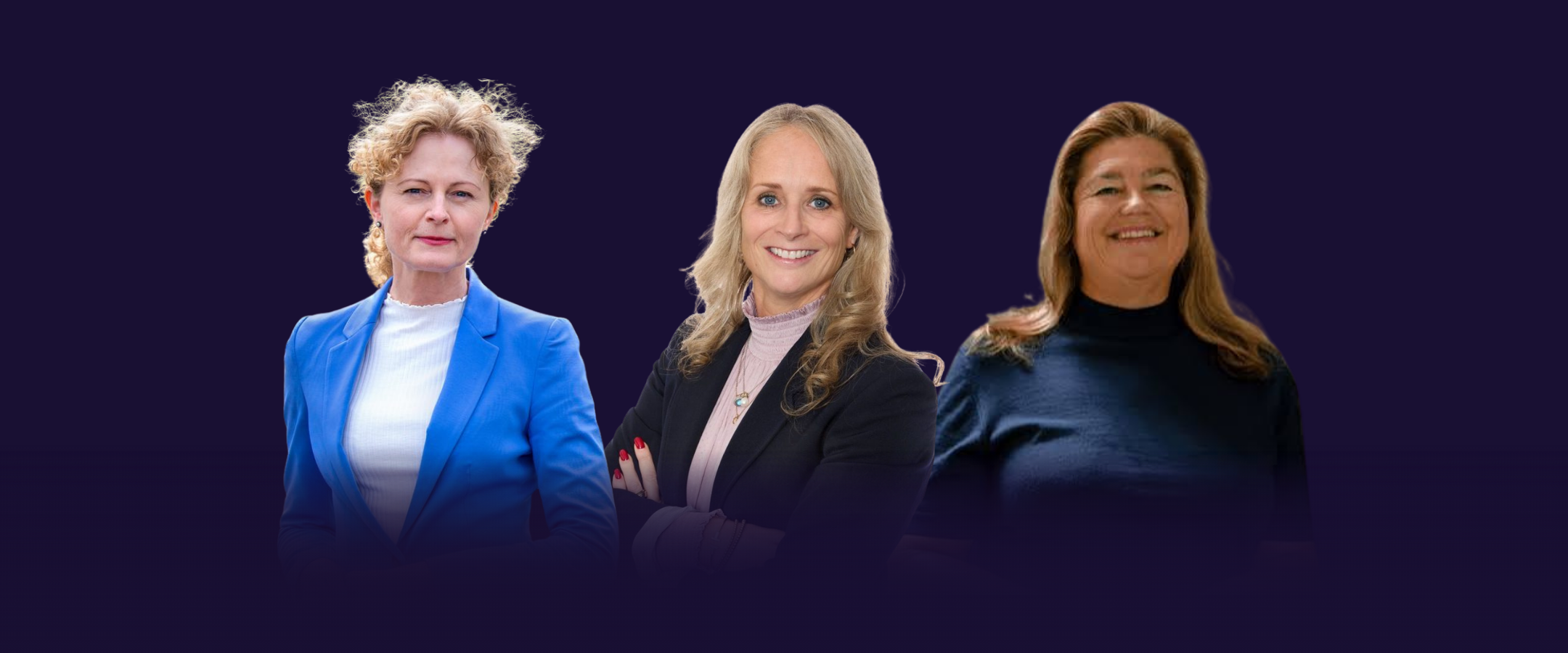
Three developments in October offer an interesting perspective. Nardie Scharenborg joined the board of the Dutch AI Coalition, Kim De Maeseneer was appointed Chief AI Officer at technology group Cegeka, and Ilze Cools, CIO of construction company Dura Vermeer, received a nomination for CIO of the Year.
Their responsibilities span public-private cooperation, commercial strategy and organisational transformation. Together, they demonstrate the range of leadership expertise now involved in determining how AI is developed and adopted across Dutch business.
On 1 November, Nardie Scharenborg joined the board of the Dutch AI Coalition, AIC4NL, a public-private organisation working to accelerate the responsible development and adoption of artificial intelligence in the Netherlands.
Scharenborg belongs to one of the firstgenerations in the country to complete an academic degree in artificial intelligence. Her subsequent career has combined technological expertise with senior positions in international business and government.
At SSC-ICT, the IT service provider for theDutch central government, she served as Chief Technology Officer and Chief Information Officer, leading initiatives involving secure digital services and the practical application of AI in the public sector. Earlier in her career, she worked in senior consulting roles at Infosys, supporting large-scale digital transformation.
Her responsibilities at AIC4NL include strengthening regional AI networks, developing public-private programmes and advancing the responsible use of the technology.
The appointment comes at a consequential time for the Netherlands. Questions surrounding investment, regulation, digital sovereignty and access to technological infrastructure are increasingly important to the country's economic competitiveness.
For Scharenborg, the challenge is to bring together government, businesses and research institutions so that AI development can translate into practical applications. Her role places her at the intersection of technological innovation, public policy and economic strategy.
At technology services group Cegeka, Kim De Maeseneer has taken on a newly created position as Chief AI Officer, joining the company's Executive Committee and reporting directly to CEO Koen Deryckere.
Her appointment reflects the growing commercial significance of artificial intelligence. Businesses are increasingly looking beyond individual AI experiments towards applications that can improve productivity, create new services and generate measurable returns.
De Maeseneer brings 27 years of experience at Accenture, where she held senior European leadership responsibilities across industries including automotive, manufacturing, retail and pharmaceuticals. Her background combines large-scale business transformation with commercial strategy, experience that is central to her new mandate.
At Cegeka, she will lead the development of AI solutions for clients, working across the group's industry and service teams to identify opportunities that can be implemented securely and at scale.
The decision to establish a dedicated Chief AI Officer position on the Executive Committee is significant. It places responsibility for AI alongside other senior commercial and operational priorities, with direct accountability to the chief executive.
It also reflects a change in what businesses expect from technology leadership. Alongside technical knowledge, companies increasingly require executives who understand how new capabilities affect their business models, investment decisions and customer relationships.
The Challenge of Making AI Work Across an Organisation
While Cegekais developing AI solutions for its clients, Ilze Cools, CIO at Dutch construction group Dura Vermeer, is focused on integrating digital technologies into an established organisation.
Her work earned her a nomination for the 2026 CIO of the Year Award, which recognises leadership in digital transformation, innovation and business collaboration.
Over the past three years, Cools and her team have transformed Dura Vermeer's IT function from a primarily operational department into a strategic partner for the business.
The company has completed a cloud transformation and is developing its data and AI capabilities. One initiative, From Searching to Finding, focuses on organising and structuring internal information so that AI can eventually make company knowledge easier for employees to access and use.
The work illustrates a challenge facing organisations across virtually every industry. Introducing new technology requires reliable infrastructure and data, but its effectiveness also depends on employees understanding how and why they should use it.
Cools has emphasised the growing importance of change management and adoption within the CIO role. Communication, collaboration and the ability to establish clear priorities have become as important to successful transformation as the technology itself.
For established companies with complex operations, this leadership responsibility is particularly significant. The value of AI ultimately depends on how effectively it becomes part of everyday business processes.
Although the three women operate in different environments, their responsibilities reveal a common development.
Scharenborg is helping shape the conditions under which AI can be developed and adopted nationally. De Maeseneer is responsible for translating AI capabilities into commercial opportunities. Cools is leading the organisational changes required to put digital technologies into practice.
Each role requires a different combination of expertise, but all involve decisions that extend well beyond the technical performance of an AI system.
The financial implications of technology investment, the management of organisational risk, the development of new services and the impact on employees increasingly demand the attention of senior executives.
For women already operating in leadership positions, this development is particularly relevant. Expertise in corporate strategy, finance, governance, operations and organisational transformation can play an important role in determining how businesses approach AI.
Technical understanding remains essential, and successful implementation depends on close cooperation with specialists. However, the growing range of AI-related leadership roles shows how responsibility is expanding across established executive disciplines.
As AI becomes more deeply integrated into business operations, organisations face an important governance question: where should accountability for the technology sit?
Some companies are creating dedicated executive positions, following Cegeka's example. Others are extending the responsibilities of existing CIOs or distributing oversight across their leadership teams.
Each approach has advantages. A dedicated Chief AI Officer can provide focus and coordination, while integrating AI into existing executive roles may strengthen its connection to the wider business strategy. The appropriate structure depends on the organisation, its industry and the maturity of its technological capabilities.
What matters is that responsibility is clearly defined and supported by the authority to make decisions.
The experiences of Scharenborg, De Maeseneer and Cools illustrate how different forms of leadership are contributing to AI's development in the Netherlands. As companies move from experimentation towards implementation, the people determining where, why and how the technology is used will have considerable influence over its economic and organisational impact.
For today's executive leadership teams, that responsibility is becoming increasingly difficult to separate from the broader direction of the business.
Leading Ladies is a members-only network for women at the top, founders, CEOs, investors, and board members. We host exclusive events, facilitate meaningful connections, and share the insights that define tomorrow's leadership.