For female leaders whose work requires travel, the hotel has always been more than accommodation. It has been preparation space, recovery space, and the location from which the most consequential meetings of any given week are conducted. For most of the modern era of luxury travel, that function was treated as secondary to the hotel's primary role as a place to sleep. The wellness offering, when it existed, was an amenity. By 2026, that hierarchy is reversing.
The shift was made explicit in February 2026, when The Dylan Amsterdam's director of sales and marketing, Max Dijkema, told Newsweek that the hotel was seeing a clear movement toward intentional travel, in which wellness is integrated into the overall stay rather than treated as a separate experience. Even when away from home, guests want to maintain their personal routines, feel grounded, and make conscious choices that support their wellbeing while still immersing themselves in the destination.
The framing matters. Wellness, in the new luxury hotel logic, is not a service available on request. It is the operating principle around which the rest of the hotel is designed. The architecture, the lighting, the dining, the room product, and the staffing all serve the guest's wellbeing rather than competing with it.
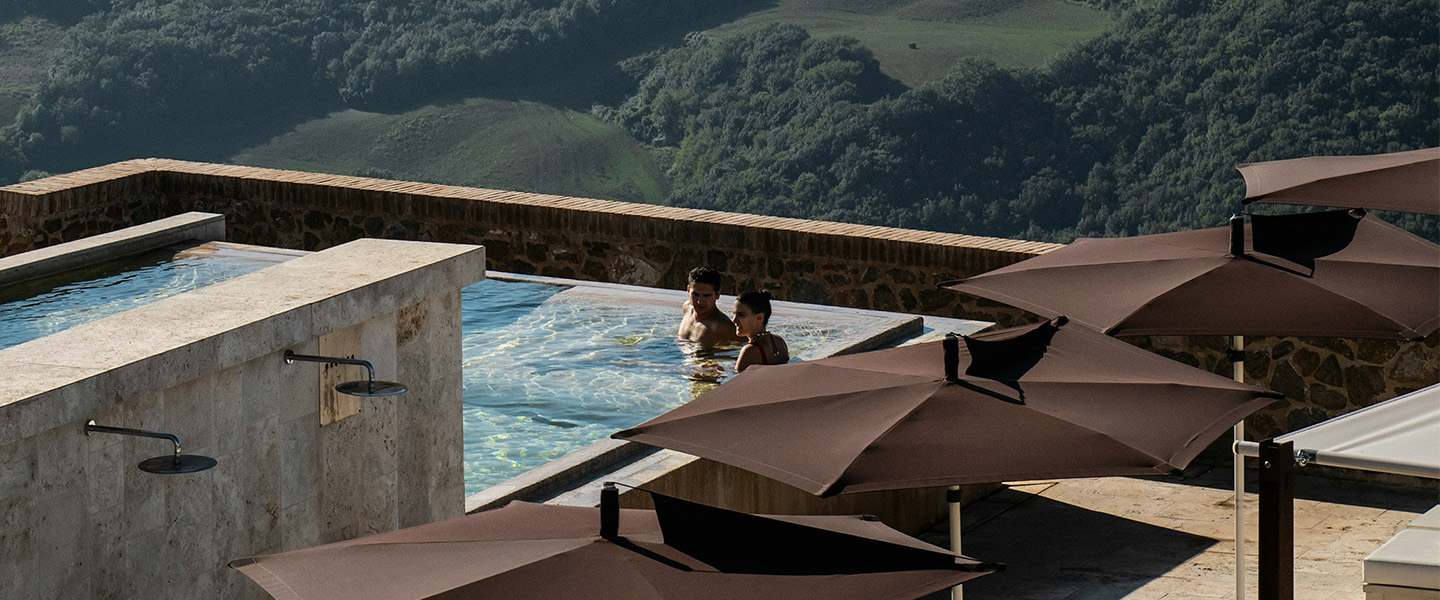
That repositioning is most visible in Amsterdam, where several of the city's most established luxury properties have made wellness the centre of their offer. Akasha Wellbeing at the Mandarin Oriental Conservatorium received the Netherlands Best Hotel Spa 2025 award from the World Spa Awards. Rosewood Amsterdam, which opened with Asaya Spa as a defining feature, now positions wellness as inseparable from the rest of the guest experience. Le Spa by Skins Institute at Hotel De L'Europe and the wellness offerings at Anantara Grand Hotel Krasnapolsky all reflect the same conviction. The hotel is not a place that happens to have a spa. The spa, increasingly, is the hotel.
For women in leadership positions, the recalibration is more than aesthetic. It addresses a problem most have lived with for years.
The traditional luxury business hotel was designed around the assumption that the guest was, primarily, a man on a short trip, who would arrive late, work in the room, eat in the bar, and depart early. The amenities reflected that assumption. The gym was small. The food was rich. The lighting was warm rather than restorative. The wellness facilities, when they existed, were positioned for guests on leisure stays rather than for executives whose performance the next day depended on their condition that night.
Leading Ladies’ members, many of whom travel weekly or fortnightly, have spent careers working around that design. The new generation of luxury hotels treats wellness as professional infrastructure. The 18-metre lap pool at Akasha Conservatorium is available before breakfast meetings. The treatment menu at Rosewood Amsterdam is designed for guests whose schedules require recovery in real time, not over a weekend retreat. The dining at The Dylan, with its emphasis on balanced, seasonal options, supports the energy management that long working days require.
The repositioning is global.The 50 most anticipated luxury hotel openings of 2026 list, published by Luxury Travel Expert, includes Conrad Athens The Ilisian, Nobu Hotel Elbtower Hamburg, Raffles Jeddah, Six Senses developments across the Middle East, and FourSeasons Cartagena. What unites the openings is not architectural style or destination. It is the integration of substantial wellness infrastructure aspart of the core property, not as an add-on.
Several of these openings include private members' clubs as part of the hotel offer. The Nobu Elbtower includes a dedicated members' club with access to wellness and dining. Conrad Athens incorporates a private members' club within the hotel. The model echoes the membership clubs that have grown in major cities over the past decade, but with the distinct advantage of being attached to a hotel that members can use during travel.
For executives whose travel patterns mean they are regularly in cities other than their home base, this combination, of private hotel club, integrated wellness, and professional-grade dining, is the most relevant infrastructure development of the current cycle.
Three considerations follow from the shift.
The first is choice. The wellness offering at a hotel, which used to be a peripheral consideration, now belongs near the centre of how leaders select where to stay. The pool, the treatment menu, the gym specification, and the dining philosophy are no longer indicators of luxury. They are indicators of whether the hotel will support or undermine the work the guest is in town to do.
The second is loyalty programmes. Hotel groups have begun to align their loyalty structures with the new wellness logic. Membership programmes at the Mandarin Oriental, Rosewood, Senses, and Aman now carry wellness benefits across properties. For women whose travel is geographically distributed, building a loyalty position with a group whose wellness offer is consistently strong is a more practical investment than the traditional points-and-upgrades model.
The third is integration. The most useful approach is to build a small, vetted list of properties in the cities most regularly visited, where the wellness offering is known to support rather than compete with work. The investment of time required to develop that list is repaid in years of better-quality travel.
The repositioning of wellness in luxury hotels is, in a sense, the catching-up of the industry to a reality its most demanding guests have lived for years. Women whose careers depend on being functional, present, and recovered through long sequences of high-stakes meetings have been seeking out the hotels that supported that requirement for as long as the requirement existed. What has changed in 2026 is that the industry, finally, is designing for them rather than around them.
The wellness offering is no longer a luxury amenity competing with the bar and the boardroom. It is the infrastructure that determines whether the executive who walks into the next morning's meeting is at her best or merely present.
Sources:
Newsweek interview with Max Dijkema
The Dylan Amsterdam (February 2026)
WorldSpa Awards 2025
Mandarin Oriental Conservatorium Akasha Wellbeing
RosewoodAmsterdam Asaya Spa
I Amsterdam wellness hotels guide
Luxury Travel Expert "50 Most Anticipated Hotel Openings of 2026".
Leading Ladies is a members-only network for women at the top, founders, CEOs, investors, and board members. We host exclusive events, facilitate meaningful connections, and share the insights that define tomorrow's leadership.