The Polymath in the Boardroom
Rodria Laline built a career that crosses science, technology, and governance. Now she is reframing the question Europe cannot avoid not whether to control its own AI, but how to build sovereignty through integration rather than duplication.
There is a particular kind of authority that cannot be manufactured. It is built slowly, across decades, disciplines, and continents, until a person can sit in a boardroom and see what others in the room cannot. Rodria Laline has that authority. The Times has called her a worldwide authority on corporate governance. The House of Lords has cited her work. And in 2026, she is using that standing to press one of the most consequential questions of the decade.
Her starting point was not business. It was science. Born in Indonesia, and raised in the West, Laline earned a doctoral degree in molecular chemistry and quantum physics. That training in how complex systems actually behave would shape everything that followed. It is the difference between someone who manages technology and someone who understands it from first principles.
From the laboratory to thinking with machines
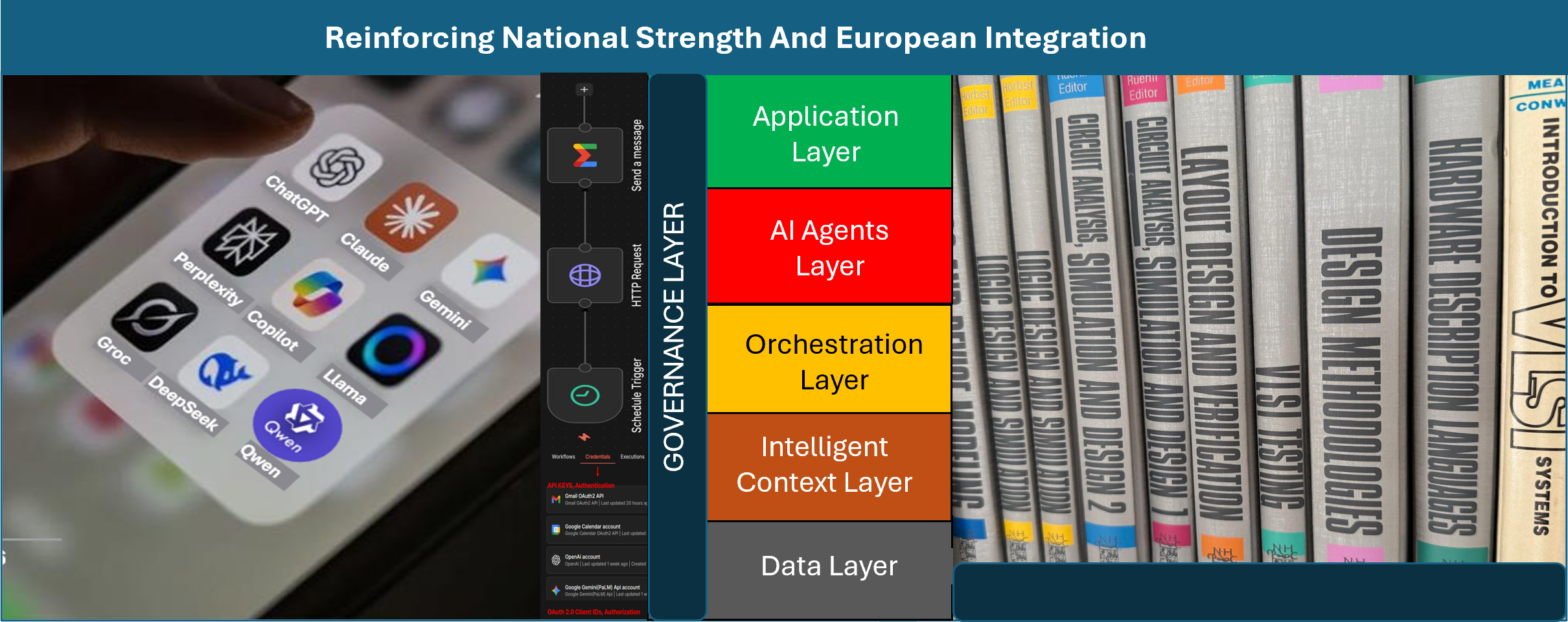
Laline did not stay in the laboratory. She moved into the engine rooms of the global technology industry at the moment it was being built. She led global research and development collaborations with IBM, Hewlett-Packard, Digital Equipment Corporation, Oracle, Siemens, Philips, ING, and KPN. She served in Oracle's general management and became chief executive of its Asia-Pacific operations. She co-founded the Global Chipcard Alliance and sat on the board of the Open Software Foundation.
One detail captures the scale of her technical contribution. She co-invented the first chip used on the bank card in your wallet. The technology that hundreds of millions of people use without thinking, every day, at every cash machine, carries her fingerprint. Few people who advise boards on technology have ever built any. Laline built the foundations.
The architecture of governance
In 2005 she founded Intrabond Capital, with offices in Hong Kong, Amsterdam, San Francisco, and New York. From there she built the second half of her career, the half concerned not with how technology works, but with how the institutions that wield it should be governed.
She co-founded the MYBP Board Program at Harvard. She directed corporate governance programs at Nyenrode. She has held visiting professorships at INSEAD, IESE, IMD and beyond. She has chaired supervisory boards across industrial, consumer, financial services, and real estate sectors. She has advised presidents of nations, central bank governors, and chief executives. She has lived and worked in more than twenty countries and been immersed in sixteen cultures.
Today she is Founding Director of IMDBOND, the board advisory firm and think tank through which she constructs risk-weighted and impact-weighted strategies for corporations and academic institutions. The through-line of her work is a single conviction: that leadership requires systemic change, not superficial adjustment. That the structures, values, and assumptions beneath an organization matter more than its surface.
The question Europe cannot avoid
In a recent interview Rodria has argued that Europe's future competitiveness depends on four strategic transitions. First, Europe must build technological sovereignty. Second, Europe must invest where economic value is created across the AI Stack. Third, Europe must develop governance capable of managing the Intelligence Economy. But a fourth transition now becomes unavoidable. The boardroom itself must evolve. Competitive advantage increasingly depends upon how effectively organizations integrate human judgment with artificial intelligence. This creates a transformation from the digital enterprise to what she calls the Cognitive Enterprise.
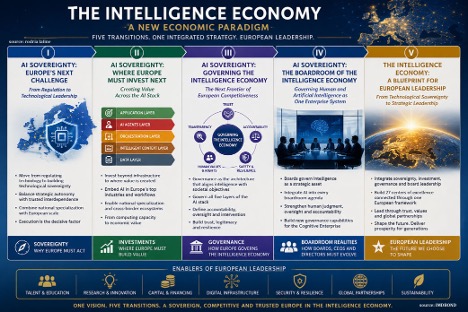
Intelligence itself becomes a strategic corporate asset.
That conviction has now found its most urgent application. In recent months, Laline has become one of the clearest voices on the Intelligence Economy and AI sovereignty, the question of who controls the artificial intelligence that is moving from a tool into the infrastructure that runs banks, governments, hospitals, and energy grids.
Her framing is more precise than the usual debate allows. Europe's challenge, she argues, is not to choose between autonomy and interdependence. It is to learn how to balance both. She points to the new EU Technological Sovereignty Package as a genuine shift in posture. For years, Europe focused on regulating technology. Now it is increasingly focused on building it.
But sovereignty, in her analysis, will not be achieved by making twenty-seven member states individually self-sufficient.That path leads only to fragmentation and duplicated effort. The answer is to let each member state build on its strongest technological and industrial advantages, while the European Union coordinates the investment, the standards, the infrastructure, and the cross-border collaboration around them. National specialization, combined with cross-border ecosystems on European scale.
Her conclusion is characteristically direct. Sovereignty will not come from duplication. It will come from integration. It requires a dynamic equilibrium between strategic autonomy and trusted interdependence, and, she argues, it requires execution.
Few people are positioned to make this argument with her credibility. She understands the technology because she helped build it. She understands governance because she has taught it to boards on four continents. The two halves of her career converge precisely at the point where the most important debate of the decade is taking place.
What her example offers
Laline's career resists the usual categories. She is not only a scientist, not only an executive, not only aprofessor, not only a board advisor. She is all of them, and the value she creates comes precisely from refusing to choose. In a business culture that rewards specializations, she is a reminder that the most consequential thinking often happens at the intersections, where the laboratory meets the boardroom, where the thinking with machines meet the institution that governs it.
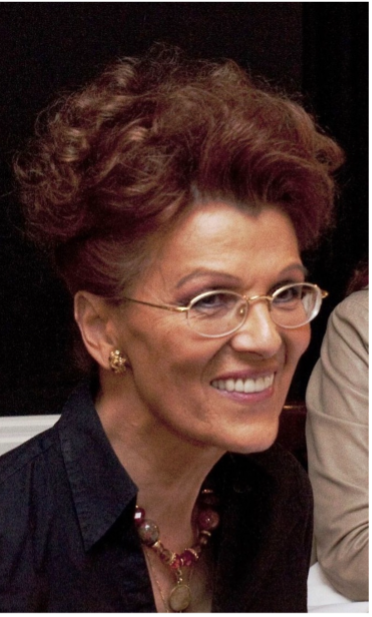
For the women in the Leading Ladies network, herexample offers something specific. It is permission to follow a path that doesnot fit a single column on a CV. It is proof that range, accumulated withdiscipline over decades, becomes its own form of authority. And it is ademonstration that the questions worth asking at the top are rarely thecomfortable ones. Rodria Laline is asking how Europe builds sovereignty overthe intelligence that will run its institutions. Her answer, that it comes fromintegration rather than duplication, is the kind of clear thinking that onlyrange can produce. It is the right question, reframed by one of the few peopleequipped to answer it.
Leading Ladies is a members-only network for women at the top, founders, CEOs, investors, and board members. We host exclusive events, facilitate meaningful connections, and share the insights that define tomorrow's leadership.