On January 15, 2026, Katie Slipper joined the executive board of Gasunie as Chief Financial Officer. She arrived from Royal Schiphol Group, where she had been Director of Finance since 2022. Before Schiphol, she held senior management positions at Royal Vopak and TNT Post Group, with earlier audit and finance experience at PwC. The combination is rare. Slipper has spent her career at the intersection of listed multinationals and Dutch state-owned enterprises. The two cultures that meet, more visibly each year, at the table where the energy transition is financed.
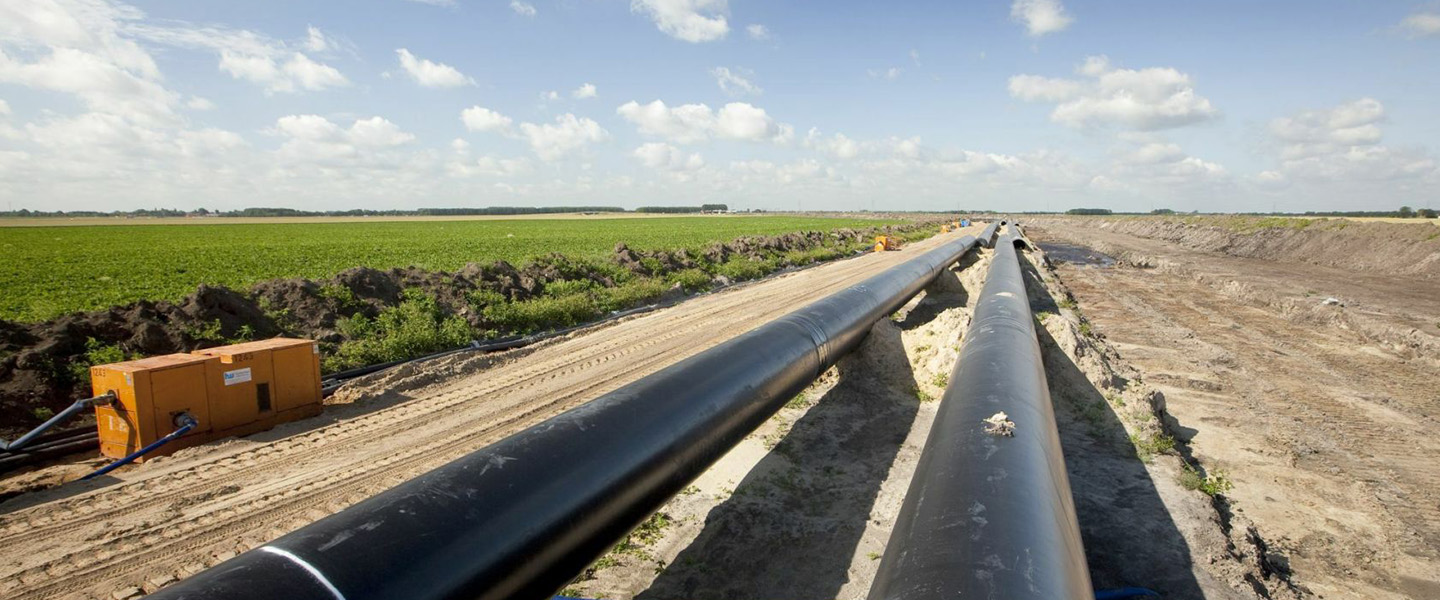
Gasunie is not a typical CFO assignment. Founded in 1963, the company is wholly owned by the Dutch state. It operates more than fifteen thousand kilometres of pipeline across the Netherlands and northern Germany. Each year, it transports approximately 125billion cubic meters of gas. It is one of the largest gas infrastructure operators in Europe, and within the next decade it will become something the company has never been before: the operator of a national hydrogen network, a national heat transport system, and a backbone for CO₂ infrastructure.
Slipper arrived at Gasunie at the precise point where the company has to finance, structure and rebuild itself for an energy system that does not yet exist.
Diederik Samsom, who chairs Gasunie's supervisory board, was precise about why she was chosen. Her trackrecord, he noted, was built in complex, international environments. Experience that would keep Gasunie agile and future-proof in the dynamics of the energy transition.
In other words, Gasunie hired a CFO who has lived inside the financial machinery of large, regulated, capital-intensive organisations and who knows how to keep those machines running while they are simultaneously being rebuilt. That is what the moment requires, and it is what Slipper has done, in different forms, at every previous post.
Furthermore, Slipper joins an executive board led by Willemien Terpstra, who has been Gasunie’s chief executive since early 2024. The company’s senior leadership now consists of two women at the centre, CEO and CFO, alongside a male chief technical officer and a male chief operating officer. In a sector that has historically been one of the most male-coded in Dutch business, the two seats that hold financial direction and overall strategic command are now occupied by women whose trackrecords were built in some of the largest infrastructure environments in the country.
The shift is broader than Gasunie. Across Dutch infrastructure and energy companies, including TenneT, Stedin, Alliander, Schiphol and Port of Rotterdam, the CFO role has changed in character over the last five years. The job used to be defined by capital structure, treasury management, regulated returns and reporting discipline. It now also requires the ability to finance multi-decade transitions through instruments that did not exist a generation ago: green bonds, sustainability-linked loans, EU recovery funding, public-private cofinancing, and balance sheets restructured for assets whose useful life is measured in fifty years.
Rather than a financial role with strategic dimensions, the CFO seat at a national infrastructure company has become a strategic role with financial mechanics.
That is why Slipper’s CV fits.Schiphol is one of the most complex finance environments in the country, with a regulated airport business, international partnerships, climate-driven capital programmes and continuous public scrutiny. Vopak operates at the centre of global energy storage. TNT Post navigated a deep, structural industry transition. Each of those posts taught a different element of the same skill:holding financial discipline steady while the underlying business is being rebuilt.
According to the SER Monitor Gender balans, women hold 17.3% of seats on Dutch executive boards. Within financial services specifically, the figure rises to 24.2%. Energy and infrastructure historically lag both, though disclosure varies and several of the largest players are state-owned and therefore reported separately.
What Slipper’s appointment, alongside Terpstra’s, does is shift one of the most strategically important infrastructure companies in the country into a different category. Two women on the executive board of Gasunie, in CFO and CEO seats, does not, by itself, change Dutch averages. But it changes what is possible to picture. It establishes, with documented track records, that the financial architecture of the Dutch energy transition can be designed and signed off by women who have spent their careers building exactly this kind of expertise.
The route from a senior finance position at one major Dutch infrastructure company to a CFO seat at another is no longer unusual. It is becoming a recognisable trajectory.Schiphol to Gasunie is a shift in sector, but not in skill. The capabilities are portable. The networks are interconnected. The boards now actively use that interconnection to build their senior teams.
The strategic lesson is this.Visible expertise in capital-intensive, regulated, transition-facing businesses is one of the most valuable specialisations a Dutch finance executive can develop in this decade. The companies that need it are large, state-linked, and increasingly led by people whose track records were built across exactly this kind of complexity.
Gasunie did not announce Slipper’s appointment as a story about gender. It announced it as a story about expertise. That is, in some ways, the point. The Dutch energy transition will not be financed by a symbolic gesture. It will be financed by a CFO who has worked inside Vopak, TNT, Schiphol, and now Gasunie, and who knows how to hold a balance sheet steady while the world around it is being redrawn.
Two women now sit at the centre of the board of one of the country’s most strategically important state-owned enterprises. They arrived there because they were the best people for the seats. The next decade of the Dutch energy transition will be designed, in significant part, on their watch.
Sources:
Gasuniepress release (November 4, 2025)
Gasunie Executive Board page (gasunie.nl)
CFO.nl (November 2025)
ManagementScope (November 2025)
Energeia (November2025); SER Monitor
Leading Ladies is a members-only network for women at the top, founders, CEOs, investors, and board members. We host exclusive events, facilitate meaningful connections, and share the insights that define tomorrow's leadership.