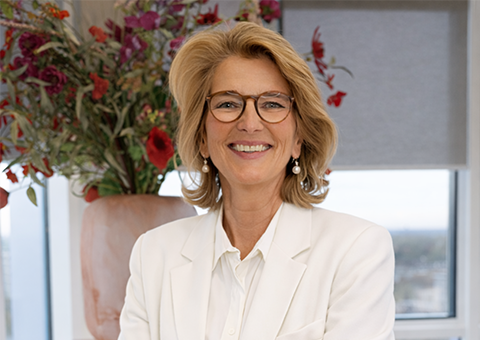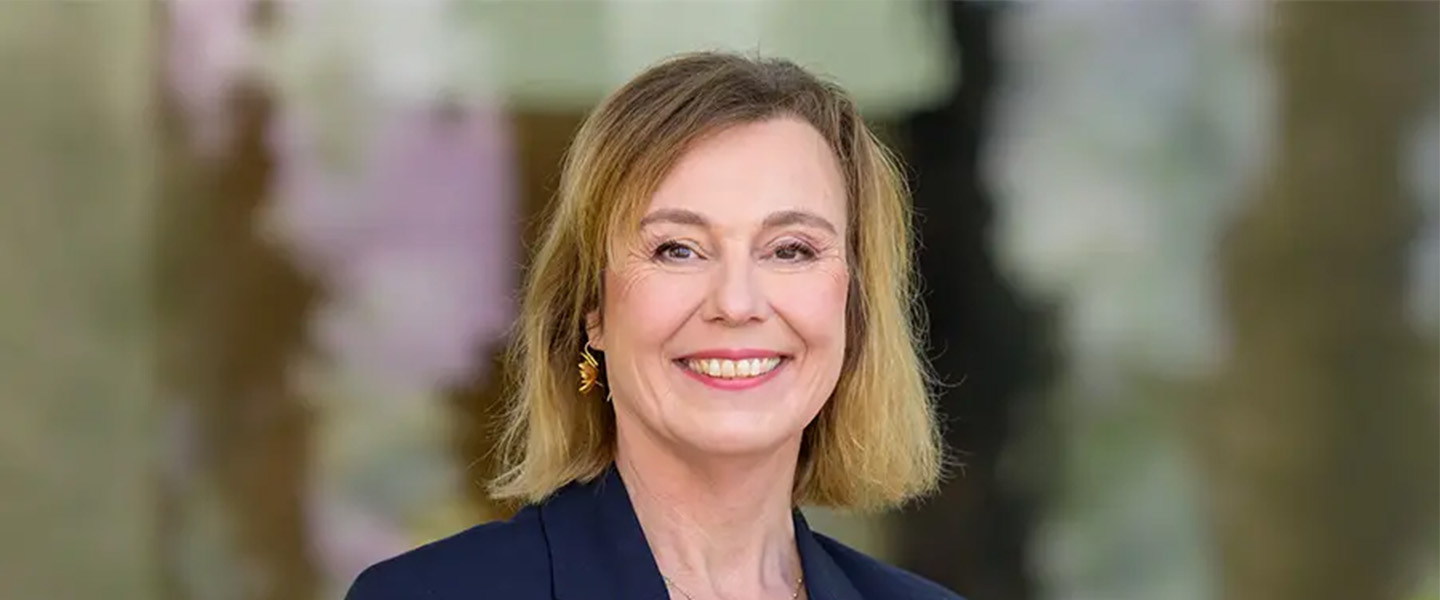
On May 20, 2026, the supervisory board of a.s.r. appointed Ingrid de Swart as chief executive and chair of the executive board, succeeding Jos Baeten after his almost twenty years at the helm. The decision was announced in October 2025. The supervisory board intends to proceed with a four-year term, subject to regulatory approval. The works council has issued a positive recommendation. By any conventional standard, this is one of the most significant CEO transitions in Dutch financial services in the past decade. It is also, deliberately, one of the quietest.
Joop Wijn, who chairs a.s.r.’s supervisory board, used a specific word in the press release announcing the intended appointment. He spoke of De Swart’s unifying presence, her experience to ensure continuity in the company’s strategy, and her forward-looking vision to drive sustainable growth. Translated out of corporate language, the supervisory board chose a CEO whose authority inside the company was already established, whose strategic direction would not require a reset, and whose track record made her the natural next leader. The supervisory board did not look outside. It promoted from within.
That is a deliberate choice. After almost twenty years of stable leadership under Baeten, including the navigation of the financial crisis, the successful IPO, and a series of consequential acquisitions including the integration of Aegon Nederland, the supervisory board could have used the moment to signal a sharper strategic break. It chose, instead, to signal continuity. The reasoning becomes clearer when one looks at De Swart’s path.
De Swart, born in 1969, has more than twenty-eight years of experience in Dutch financial services. Since December 2019, she has been a member of a.s.r.’s executive board as Chief Operating Officer and Chief Technology Officer, jointly responsible for the direction and execution of the company’s strategy. Since October 2022, she has led the integration of Aegon Nederland into a.s.r., one of the largest and most complex post-merger integrations in recent Dutch financial sector history.
Her route to a.s.r. ran through the senior ranks of three of the country’s most consequential financial institutions. From 2009 to 2013, she was CEO of ABN AMRO Verzekeringen. From 2014 to 2017, she sat on the executive board of Delta Lloyd, where she was responsible for IT, digitalisation and innovation. From 2017 to 2019, she was a board member at Aegon Nederland, where she led the digitalisation programme. The pattern across these roles is consistent. De Swart’s career has been built on the difficult, often invisible work of holding complex financial businesses together while their underlying technology, operations and customer propositions are being rebuilt.
That work, in 2026, is the work the entire Dutch insurance sector requires.
De Swart inherits a company that is structurally different from the one Baeten led for most of his tenure. The Aegon Nederland integration, which she has led for more than three years, has produced a combined business with significantly greater scale in mortgages, pensions and individual life insurance. The launch of the new ASR Hypotheek in early 2026, which combines product features from both Aegon and a.s.r., is one visible signal of the integration’s progress. The transition of a.s.r.’s real estate and infrastructure activities under a unified brand from April 21, 2026, is another. The company De Swart will lead is, in significant part, the company she has spent the last several years building.
That is the supervisory board’s logic. Continuity here does not mean preserving the past. It means preserving momentum.
Dutch financial services is one of the few sectors in the country where female representation on executive boards has consistently outperformed the broader corporate average. According to the SER Monitor Gender balans, women hold 24.2% of executive board seats and 36.9% of supervisory board seats in financial services, against national averages of 17.3% and 26.1% respectively. The reasons are partly structural. The sector has been disclosing diversity figures for longer, has more rigorous board selection processes, and includes several large institutions, includingING, Rabobank, ABN AMRO, NN Group and a.s.r. itself, that have made deliberate choices about senior leadership composition over the past decade.
What De Swart’s appointment does is shift one of the country’s largest insurers, an AEX-listed company at the centre of Dutch household finance, into the small group of large Dutch corporates run by women. It also puts a leader with deep technology and digitalisation credentials in charge of an industry where the most consequential strategic questions of the next decade are technology questions: AI in underwriting and claims, the operational reshaping of pension administration, the redesign of distribution, the integration of climate risk into actuarial models.
For our members, De Swart’s path is worth reading carefully. The CEO seats now becoming available at the largest Dutch financial institutions are increasingly being filled by leaders whose careers were built on technology, operations and complex integration work, not on traditional product or distribution backgrounds. That is a meaningful shift. It widens the population of executives who can credibly be considered for these roles, and it includes a generation of women whose careers were built on exactly this kind of work, often invisibly, often without the public profile of more conventional CEO routes.
The strategic implication is direct. Visible expertise in technology-led transformation inside regulated financial businesses is one of the most valuable specialisations available now. The boards filling the next generation of CEO seats know this. The names being chosen reflect it.
A.s.r. presents the De Swart appointment as continuity. In one sense, it is. The strategy will not change. The integration will continue. The current course will be held. In another sense, it is a quiet redefinition. The company is moving from a CEO whose career was built across the breadth of the Dutch insurance sector to a CEO whose career was built around its operational, technological and integrative core. That is not the same job, even when the strategic direction is unchanged.
On May 20, 2026, the formal handover took place. The work, in many ways, has already been underway for years.
Sources:
a.s.r.press release (October 6, 2025)
ASR Nederland Executive Board page (asrnl.com)
Het Financieele Dagblad (October 6, 2025)
Risk en Business(October 2025)
IEX (October 2025)
SER Monitor Genderbalans / Scorecard 2026(published March 2026).
Leading Ladies is a members-only network for women at the top, founders, CEOs, investors, and board members. We host exclusive events, facilitate meaningful connections, and share the insights that define tomorrow's leadership.